
GoPro announced a merger agreement at 9:20 AM ET this morning. I have been doing event driven investing for ~a decade. I cannot remember any merger agreement getting announced at 9:20 AM. Honestly, it’s incredibly rare for any PR to get made at 9:20 AM. So why did GoPro announce a merger at such a strange time?
I think it was because their stock was about to meme, and they were going to face some very uncomfortable choices. So they took the deal in front of them and cashed in with a merger they’d likely been working on for weeks (and that allowed shareholders to maintain some upside; shareholders get $1.14/share in cash plus 10% of the combined company) versus facing the unknown of navigating a meme stock while the company was in distress.
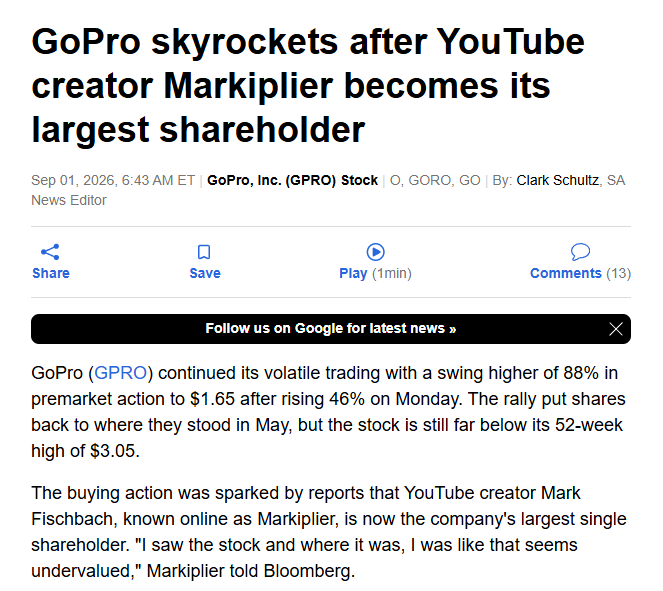
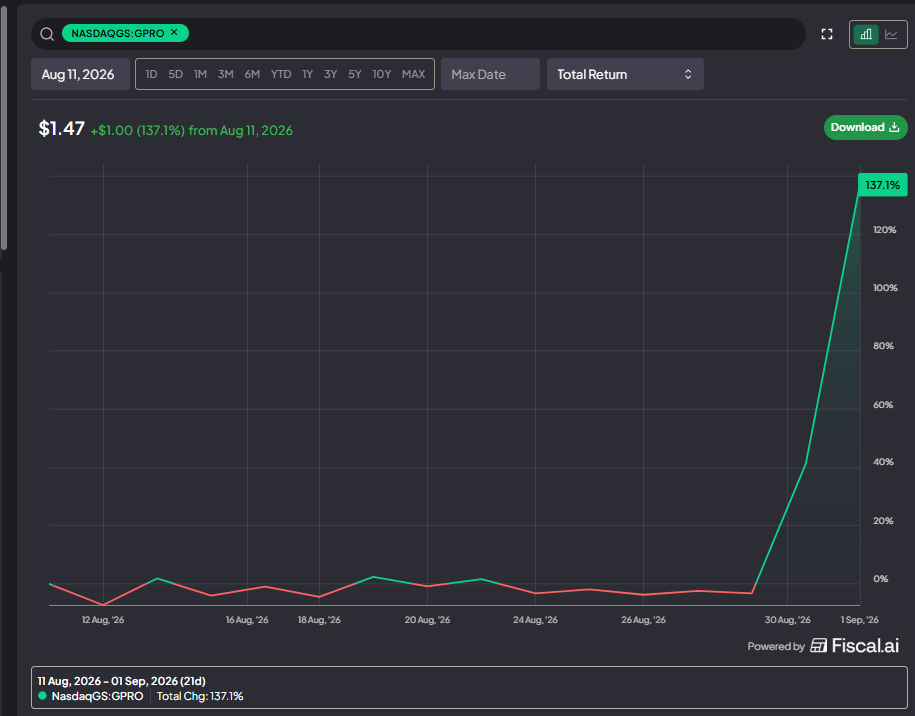
But we’ll get there. Let’s rewind to last night, when Bloomberg released an article on YouTube Star Markiplier becoming GoPro’s largest shareholder. The stock skyrocketed; it was up almost 90% premarket today after jumping ~50% on Monday.
What’s curious is that Markiplier filed a 13G on GPRO on August 20th, but the stock didn’t move on the initial filing. It seems it’s only when all the press connecting his YouTube fame to the filing started hitting that the stock started moving.
Anyway, I have more thoughts on Markiplier’s ownership stake and the rise of celebrity activist owners, and I started to write them up…. but as I started to write them, GPRO announced a fascinating merger agreement, so I’m going to save the celebrity activist owners thing for another day and look at the merger.
What’s so interesting about the GPRO merger?
To me, the most fascinating thing about it is the timing. Look at the timing of the press release; GPRO announced the merger at 9:20 AM ET.
Merger agreements are negotiated over weeks. That means their announcement is generally a timed and highly coordinated thing. For a recognizable consumer brand like GPRO, you’d think their merger agreement would get announced at, say, 7 AM, and then the management teams could go do some quick PR hits or something.
A 9:20 AM agreement seems rushed. And that seems backed up by GoPro’s website and SEC filings; as I write this (~10:30 AM ET), GoPro has yet to file anything on the merger in their SEC filings, and GoPro’s IR website barely mentions the merger (if you go to press releases, you’ll see the merger announcement, but generally a company in a merger would put the merger prominently in their IR page).
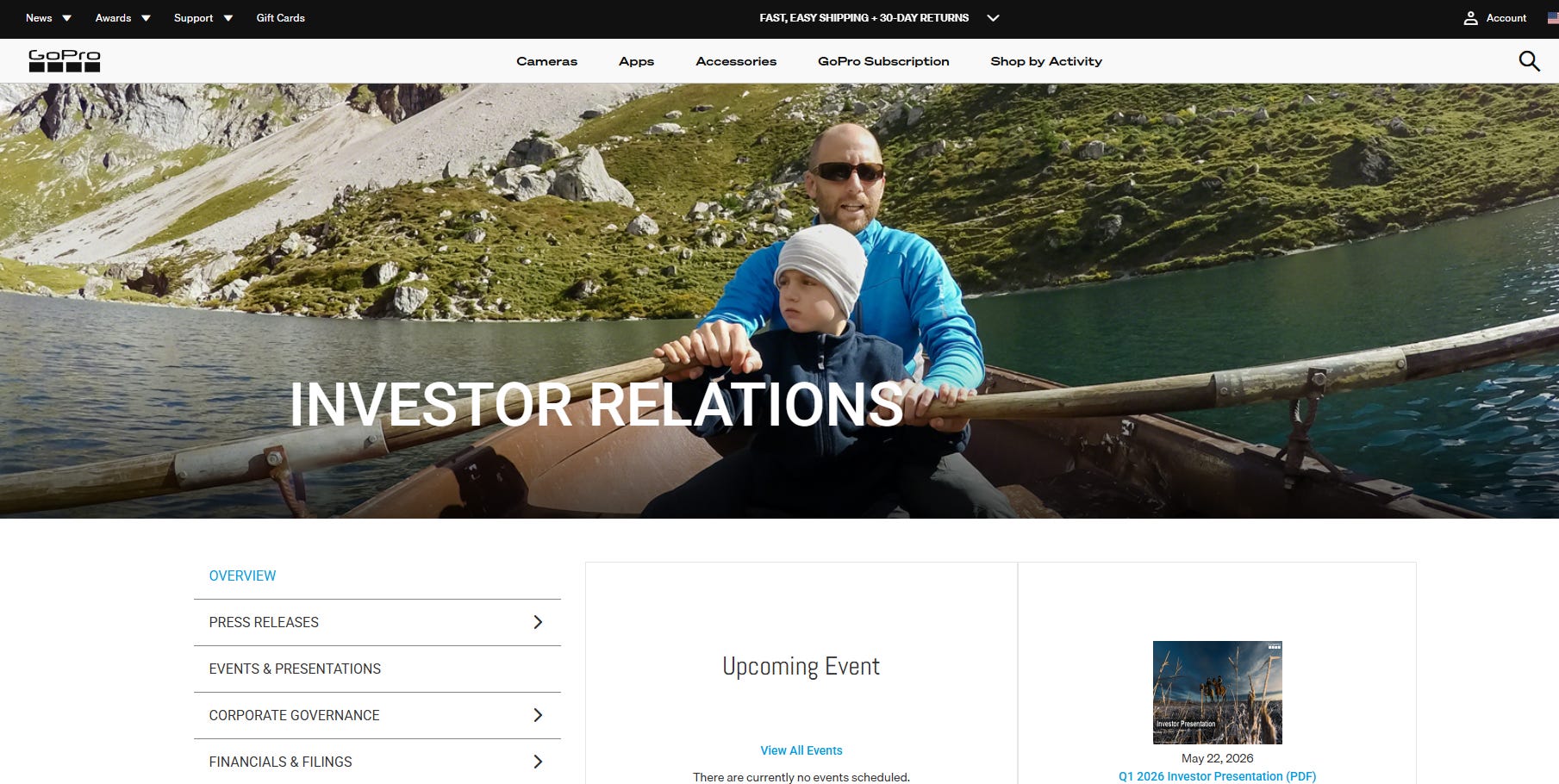
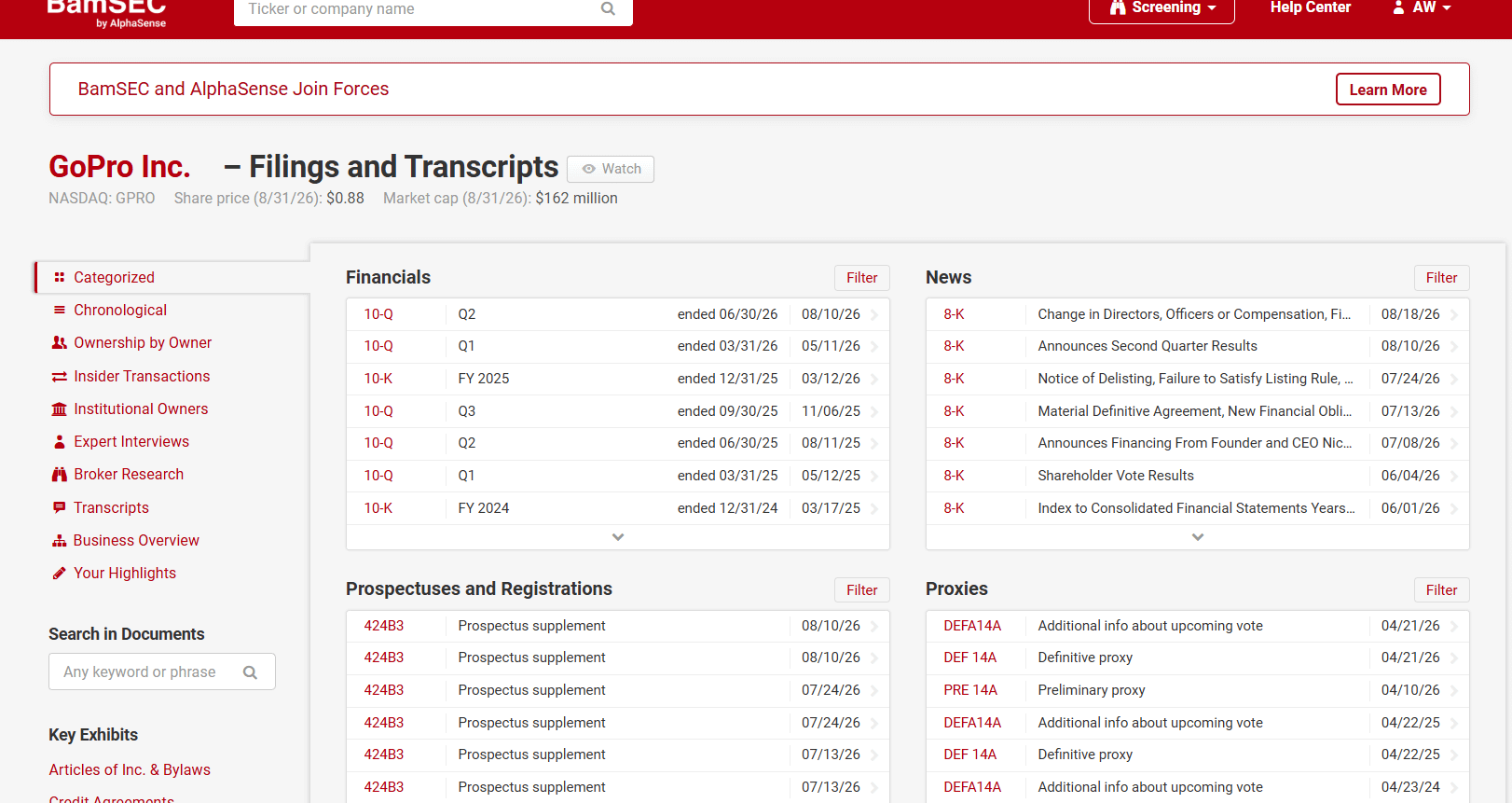
I should note it’s not completely unheard of for a company to take some time to file their merger agreement and update their SEC filings…. but this is a complicated merger and GPRO is a well known consumer brand. Both of those suggest that an SEC filing would be made quickly; the fact that there’s nothing so far suggests this is rushed.
Why do I say this is a complicated merger? GPRO’s shareholders get $1.14/share plus own 10% of the combined company in the merger. And the combined company is not a camera company; Starman is a private U.S. optical-photonics business that manufactures optical transceivers, and the merged company is pointed at AI data centers, government, defense and aerospace. So GPRO holders are being asked to value and hold 10% of a private AI infrastructure supplier that has never published a financial statement. You’d generally expect a company to give shareholders lots of information on the combined company (pro forma revenues, expected synergies, the private company’s historical financials, etc.) so that they could properly value and trade the stock. But GPRO gave their shareholders none of that; they just rushed out a PR right before the market opened saying “we are merging; you’re getting some cash plus keeping stock in the new company.”
Here’s what I suspect happened: GPRO has been working on a strategic process for a few months. They were in late stage negotiations with Starman Optical (the buyer / merger partner here), and with GPRO stock trading between $0.60-$0.80 for most of the past few months GPRO could feel comfortable that delivering shareholders >$1/share in cash plus some equity in a combined company was a huge win. They were probably looking to finalize the details over the coming Labor Day long weekend and announce a definitive deal next week.
The Markiplier 13G changed all of that. Suddenly, the stock was spiking. It closed last night at ~$0.90/share (up almost 50%) and was set to open north of $1.70/share today. If the stock held there, shareholders might not be so thrilled by the same merger package.
So GPRO faced a choice: see if it became a meme stock and reassess options from there, or rush out a merger today so they could credibly say “this merger is a huge premium from our closing price of ~$0.90/share yesterday and an even bigger premium to the 30-day VWAP.”
Now, you might say “GPRO should have meme’d and let it ride.” Maybe! It worked for GameStop and several other meme companies! But it’s worth keeping in mind that GPRO was in a financial bind; they burned almost $50m in cash in the first half of the year1, and they needed to raise $20m in cash from their founder and CEO in early July in order to support their strategic process. That cash did not come cheap, and the fact they needed their CEO / founder to provide it suggests that it was truly “lender of last resort” type stuff.
So GPRO appears to have forgone the meme stock yolo and chosen to take the bird in hand. That was probably the right choice…. but it’s a fascinating one, and you always wonder if a rushed merger agreement will have some holes or issues in it that come back to haunt the company later. And it is perhaps worth noting that the merger agreement appears to pay off the founder’s distressed financing in full; again, the merger agreement may have been the right decision, but is it possible that management / the board were in a position to be much more risk averse than would have maximized value for their shareholders2?
Perhaps we will learn more as information on the deal drips out…. but, for now, just a fascinating deal to look at.
GPRO is a seasonal business, so this may slightly overstate their cash burn…. but they burned ~$25m in FY25 and ~$120m in FY24, so they were far from on stable footing!
The distressed financing included warrants, and the founder owns a lot of stock, so you could say he had equity upside to a meme squeeze too…. but this was distressed financing with the CEO as basically the lender of last resort! Taking a quick profit on the whole thing was probably much, much more attractive than leaving a massive note out there at risk.
Well, I have to ask. Do you think this will end up as an insider trading case?
It seems ludicrous to me that somebody would build a position large enough to file a 13G, three months after the company announces a strategic process, but within a month of that process finishing; all while potentially possessing MNPI. That would be like going to the police station to announce that you are going to rob a bank next Saturday ...... but it seems like anything goes in markets these days.
The timing and sizing certainly seem odd. Why not build the position in May, after the announcement? Why size up large enough to file? Just odd.